A History Born of Fire

Christopher Barnes

The region of Etna boasts a remarkable history of wine production that spans over 6,000 years. Its fertile lands have attracted the attention of various civilizations, from the early medieval period to the Renaissance.

Following the devastating earthquake of 1693 and the subsequent tsunami, the southern slopes of Mount Etna gained significant importance for vineyards and the cultivation of the Nerello Mascalese grape. This led to a surge in the production of cutting wines, blending wines, and the distillation of wine during the phylloxera outbreak in the late 1800s.

However, World War II inflicted severe damage to the eastern part of Sicily, including Mount Etna and its surrounding countryside. This resulted in the abandonment of many vineyards. It wasn’t until the 1990s that a renewed interest in quality wine production emerged, with a focus on indigenous varieties like Carricante and Nerello Mascalese.

Over time, the area has seen a multitude of grape varieties introduced by various groups, including the Greeks, Crusaders, Benedictine and Capuchin monks, the Bishop of Catania, and the Spanish. Each grape has contributed something special to the area’s wines. Even now, vineyards may have a mix of Carricante and Nerello Mascalese, along with other indigenous cultivars like Coda di Volpe, Grecanico, Minnella Bianca, and Minnella Nera, each adding a unique flavor to the wines.

The area’s volcanic soils also play a vital role in contributing to the minerality and texture of the wines. The combination of its rich history, diversity of grape varieties, and unique terroir makes Etna one of the most special wine regions in the world.

Salvo Foti on the Palmento tradition

The agricultural landscape on Etna is characterized by numerous beautiful and ancient manor houses, most of which are now abandoned. These properties were once owned by peasants, bourgeois, and nobles. Each vineyard had a home for the owner’s family and a palmento, which is a winemaking cellar for transforming the grapes grown on the property. The palmento, with its terraced vineyards, narrow streets, and dry stone walls, all built with lava stone, is surprisingly harmonized with the Etnean environment.
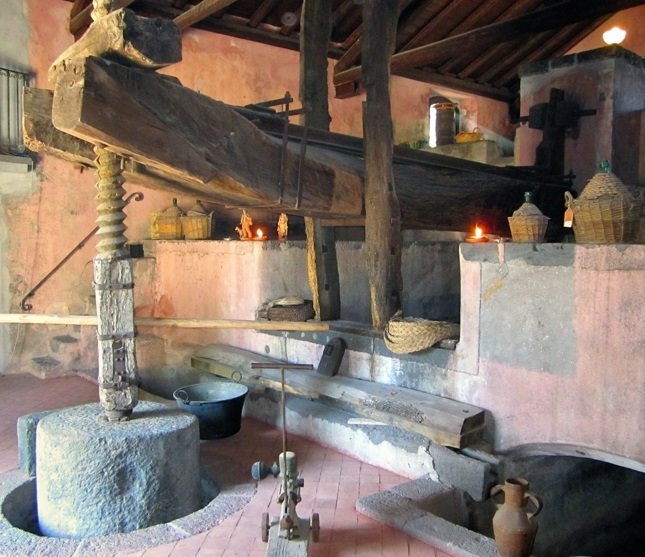
Even today, one can observe palmenti on Etna with varying vinification capacities, ranging from essential to sumptuous, and capable of producing anywhere from a few to thousands of hectoliters of wine. A defining feature of the manufacturing of Etna palmento is the use of lava stone and the exploitation of the natural slope and rugged orography of the Etna area. This design allows the force of gravity to aid in winemaking, with the crushing area, fermentation vats, pressing area, and cellar located at different and sloping altitudes.
From the end of the 1800s to the beginning of the 1900s, the Etna area produced approximately 100 million liters of wine using exclusively palmenti. While some modernizations and technical changes were implemented with the arrival of electricity, the system remained fundamentally the same.
In 1997, with the strict and indiscriminate application of EU laws on food hygiene and safety at work, the palmenti of Etna were banned and definitively closed. This led to the abandonment of thousands of palmenti and Etna vineyards and their irreversible destruction. While some producers continue to use the palmento to make their wine, they do so illegally. The lack of exceptions in the application of community laws designed to allow for gradual and financially sustainable adaptation of the Etna palmenti has led to their degradation, the abandonment of large areas of the Etna territory, and the loss of specialized winemaking workforce.
Adapting the Etna palmenti to modern winemaking techniques is necessary and indispensable if the remaining real estate and human assets are to be preserved. New techniques, greater knowledge, and a more conscious way of thinking can help integrate and harmonize the old with the new. The transition must be gradual and the changes not destructive but integrative and complementary.
Recovering and using the ancient palmenti is not only essential for maintaining, conserving, and safeguarding the territory and all that it contains and represents, but it also means recovering, using, and making productive the ancient winemaking techniques that are fundamental in producing excellent wine.
Laws must be reviewed to take into account real situations and adapt to existing ones while looking to the future. They must be at the service of humanity, not against it or only for the benefit of a few.